The Soil.
Everything we wish more people knew about the ground under our feet — how it forms, why it's alive, why it's dying, and what we can actually do about it.
What soil actually is
Most people picture soil as "dirt." Dirt is what ends up on your jeans. Soil is a living ecosystem — a slow-cooked mixture of weathered rock, decomposed plants and animals, water, air, and an almost incomprehensible number of microorganisms. A single teaspoon of healthy soil contains more living organisms than there are humans on Earth.
Soil takes a long time to make. Nature builds about one inch of topsoil every 500 to 1,000 years. Modern agriculture can strip that same inch in a single decade of poor management. The math is uncomfortable, and it's why everything S.O.I.L does begins with the soil itself, not the crop standing in it.
Soil is not a substrate. It is a body — and like any body, it can be healthy, exhausted, sick, or restored.
When we talk about "feeding the world," we are really talking about keeping that body alive long enough to keep feeding us back.
The layers of a living earth
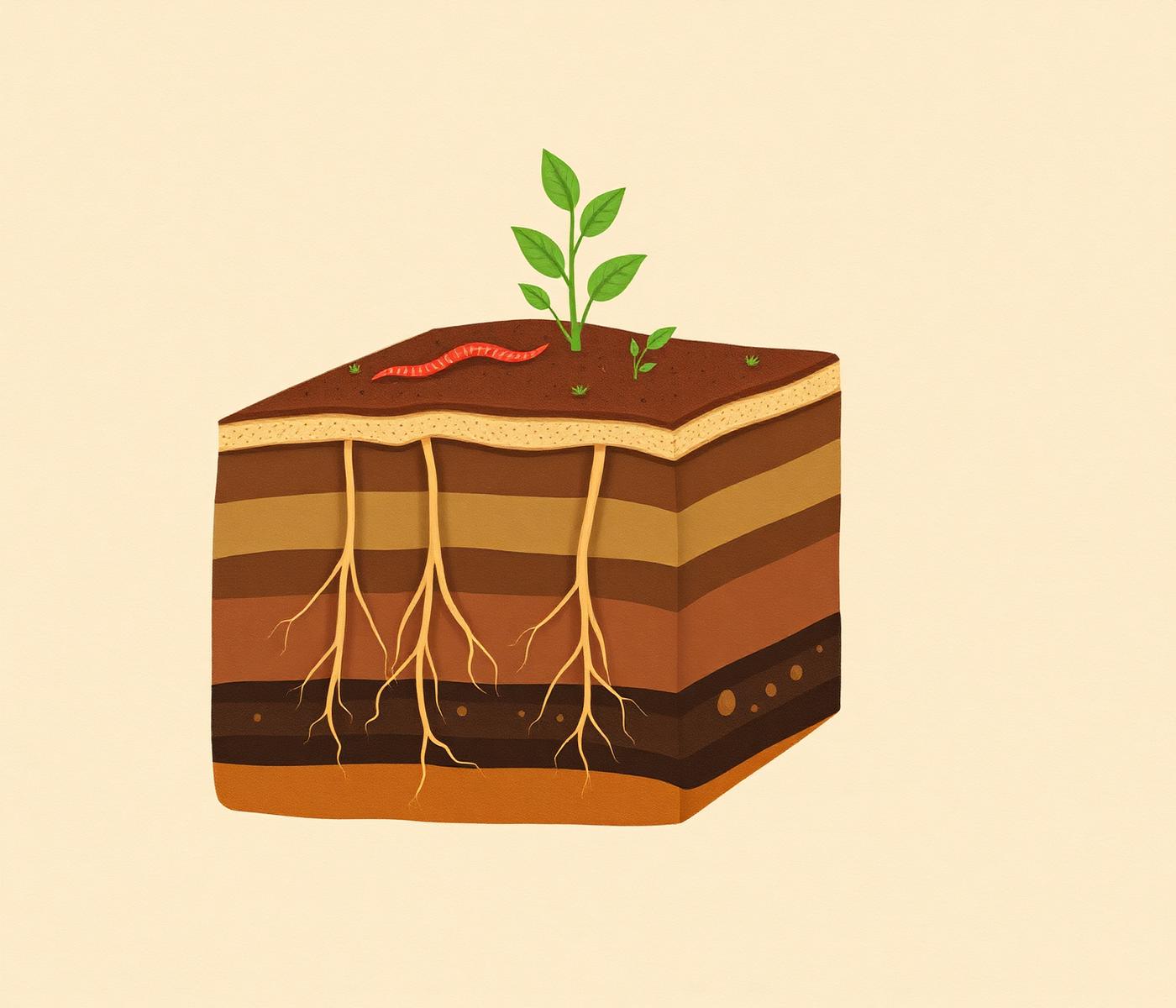
A healthy soil profile is layered like a quiet cathedral. Each horizon does its own work, and removing any one of them weakens the rest.
The soil microbiome
Under every footstep is a city. Bacteria, fungi, protozoa, nematodes, archaea — billions of them, working in trade networks older than humanity. Plants don't just sit in soil; they communicate with it. Roots release sugars to recruit the microbes they need, and in exchange those microbes deliver phosphorus, nitrogen, and water from places the roots can't reach.
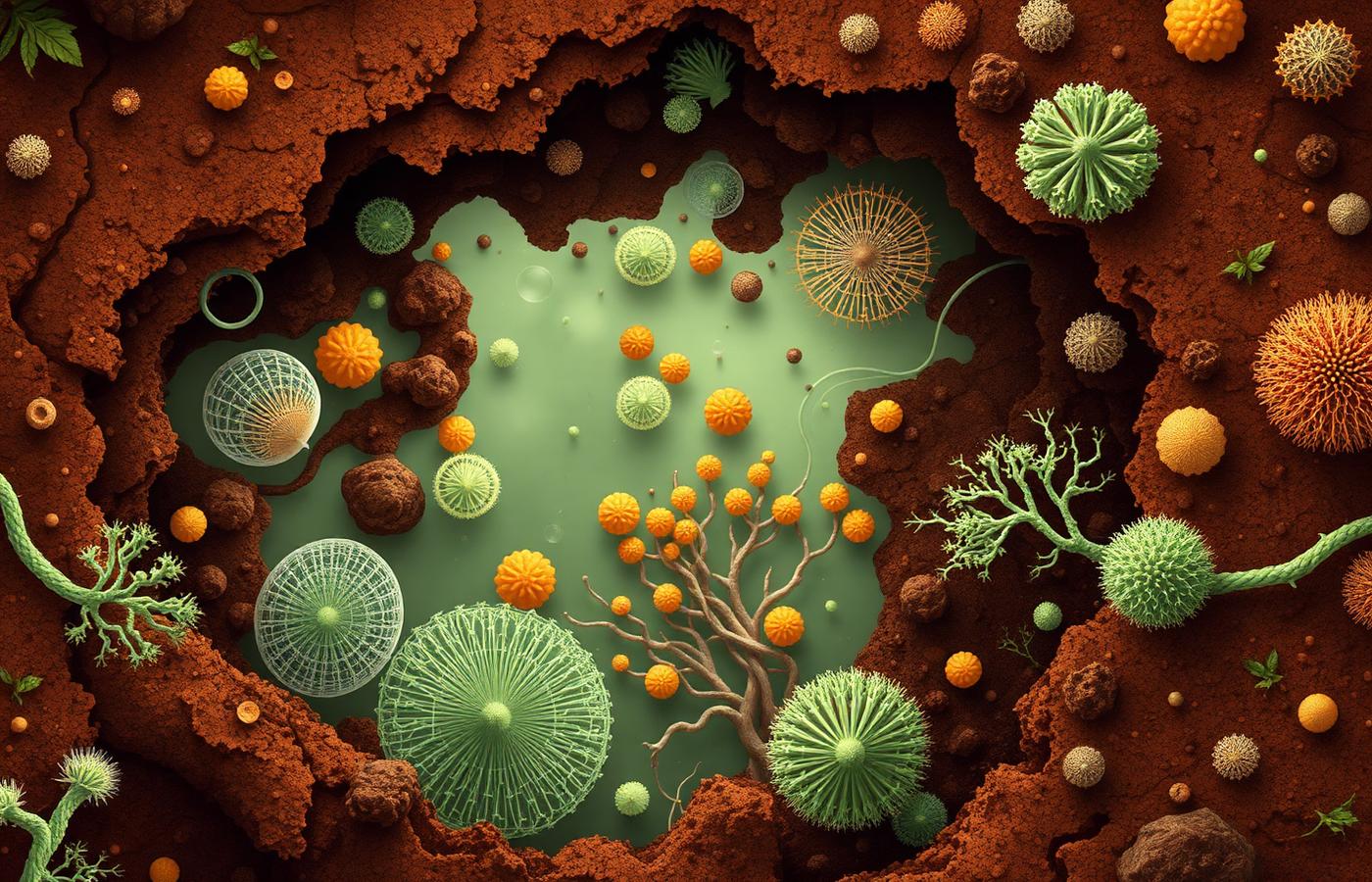
Bacteria
The fastest decomposers — they turn fresh plant matter into plant-available nutrients within days.
Mycorrhizal fungi
Form a root extension network up to 1,000x the surface area of the plant's own roots.
Earthworms & arthropods
Mix and aerate the soil, dragging organic matter deep where roots and microbes can use it.
You can't fertilize your way out of a dead microbiome. You have to bring the workers back.
How we broke it
The 20th century gave us synthetic nitrogen, monocultures, and the tractor. Yields exploded. So did the bill. Today, roughly 33% of the world's soil is moderately to highly degraded, and we lose tens of billions of tonnes of topsoil every year to erosion alone.
Synthetic fertilizers don't restore soil — they bypass it. They feed the plant directly, salt-style, while the underground microbial city starves. After enough seasons, the only way to grow anything is to dump in more chemicals. That's the bandaid.
How we rebuild it
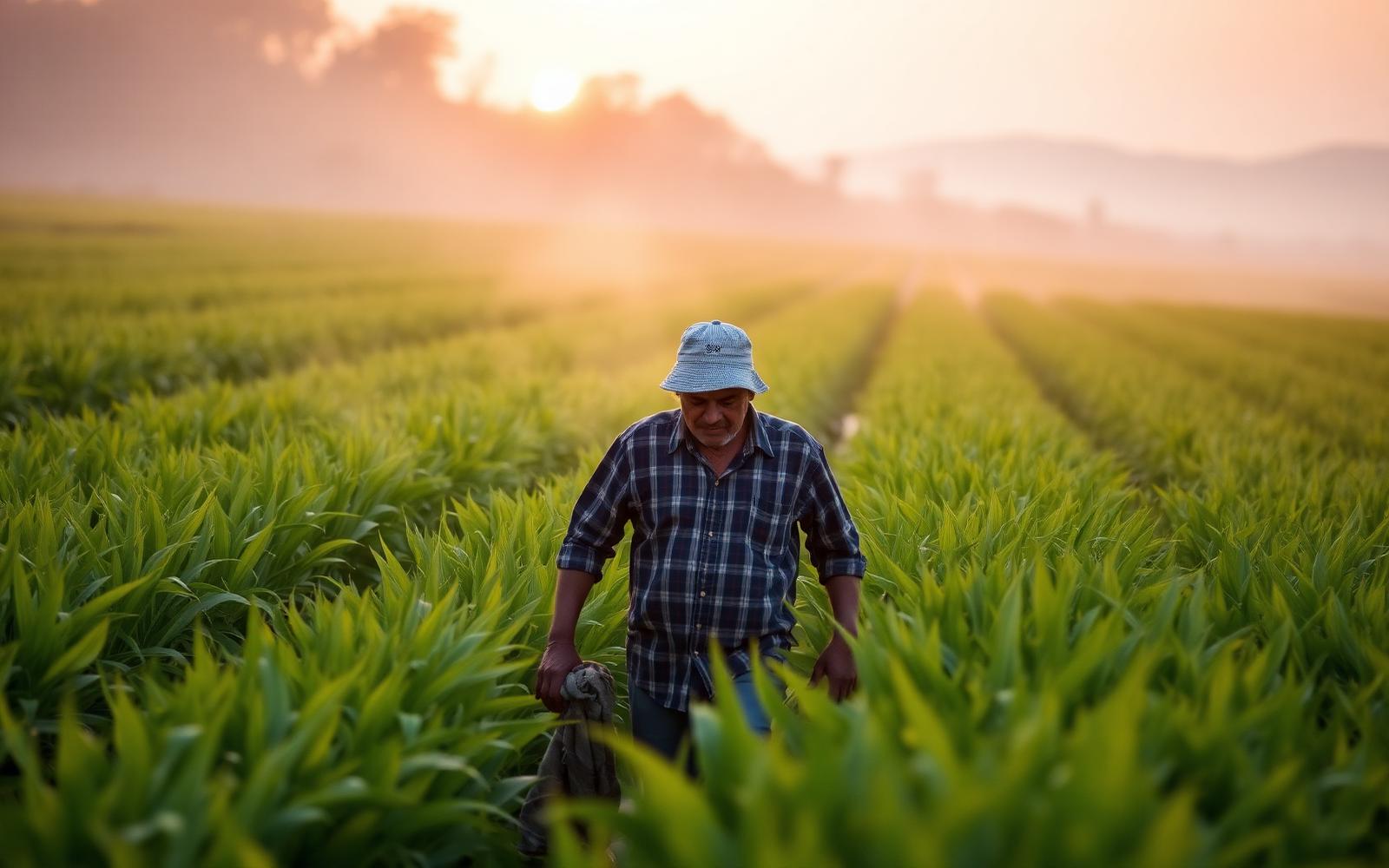
Regenerative farming is less of a method and more of a posture. The goal isn't to extract — it's to leave the soil more alive than you found it. There are five practices we keep coming back to.
- 01
Keep the soil covered
Bare soil bakes, blows, and washes away. Mulch, cover crops, or living plants every season.
- 02
Keep living roots in the ground
Roots are how the microbiome eats. Rotate cover crops so something is always growing.
- 03
Disturb the soil as little as possible
Tillage shreds fungal networks. No-till and low-till preserve the underground city.
- 04
Maximize biodiversity
Polycultures and rotations feed a wider range of microbes — and break pest cycles.
- 05
Reintroduce organic matter
Compost, manure, biochar, and biological fertilizers like Cannorganix. Bring the food back.
What you can do
You don't need a farm to participate in soil. Whatever your scale, there is a version of this work that fits:
If you grow food
Start a compost pile. Mulch every bed. Try Cannorganix instead of synthetics for one season and watch what happens.
If you eat food
Buy from farmers who name their practices. Regenerative, organic, no-till, polyculture — those words matter.
If you have an institution
Schools, restaurants, cities — partner with us to convert procurement and land toward regenerative growers.
If you have nothing to grow
Donate. Every $25 funds Cannorganix and training for a farmer joining the network.